

Oshi casino Plinko game
Introduction
Plinko looks simple at first glance. A ball drops from the top of the board, hits a series of pegs, changes direction again and again, and eventually lands in a payout slot at the bottom. That visual simplicity is exactly why the format works so well. In practice, though, Oshi casino Plinko is not just a casual drop-and-watch diversion. It is a fast, probability-driven casino game where small interface choices—bet size, number of rows, and selected risk level—can change the entire feel of a session.
I’ve spent enough time studying modern instant-win formats to say this clearly: Plinko attracts attention not because it is complicated, but because it turns randomness into something visible. In a slot, the math is hidden behind reels and symbols. In Plinko, the uncertainty plays out in front of you. You see every bounce. You feel every near miss. That makes the experience more transparent on the surface, but not necessarily easier to manage.
For players in Australia looking at Oshi casino Plinko, the key question is not whether the game is entertaining. It usually is. The real question is what kind of experience it creates, how volatile it can become, and whether that style of play matches your expectations. This article focuses on exactly that: how Plinko works, what drives its rhythm, where the real risks sit, and why it can be either a smart short-session choice or a frustrating one, depending on how you approach it.
What Plinko is and why it gets so much attention
Plinko belongs to the broader category of instant games rather than classic slots. There are no paylines, no reel sets, no Oshi Casino bonus for Australian players rounds in the traditional sense, and no long visual build-up before the result. Each round begins with a drop and ends when the ball lands in one of the multiplier pockets. That direct structure gives the format immediate clarity.
The reason Plinko became so noticeable across online casino platforms is easy to understand. It combines three things that rarely sit together this neatly:
Instant readability. A new player understands the basic concept in seconds.
Visible randomness. The path of the ball creates tension that feels physical, not abstract.
Customisable session style. By changing rows and risk level, players can make the same game feel calmer or far more aggressive.
That last point matters more than many people expect. Two players can launch Oshi casino Plinko and have completely different experiences within minutes. One might choose a lower-risk setup and see frequent modest returns. Another might switch to high risk, chase the edge multipliers, and go through long dry stretches waiting for a rare spike. The interface looks almost identical in both cases, but the emotional temperature of the session changes sharply.
One of the most interesting things about Plinko is that it feels fairer to many players simply because they can watch the ball move. Whether that feeling is mathematically justified is another question. The result is still governed by probability. But the visible journey gives players a stronger sense of participation than many other casino games do.
How the core Plinko mechanics actually work
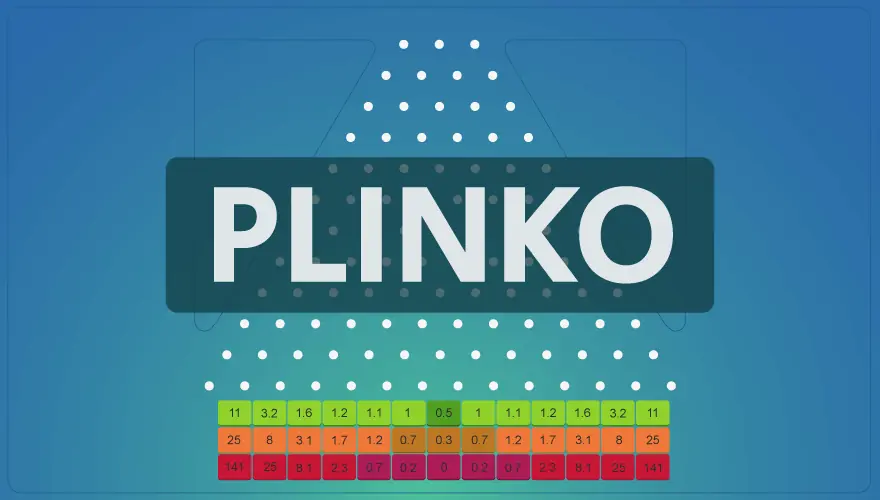
At its base, the mechanic is straightforward. You choose your stake, often select a number of rows, set a risk level, and release the ball from the top of the board. As it falls, it collides with pegs and moves left or right until it reaches a multiplier slot at the bottom. The multiplier attached to that slot determines the return for the round.
What matters in practice is that the board is not balanced in terms of outcomes. Central slots usually carry lower multipliers and are easier to hit more often. Outer slots tend to hold the highest values, but they are less likely to be reached. That distribution is the heart of the game’s logic. Plinko is built around the tension between common, low-value landings and rare, high-value results.
Here is a simplified view of the main adjustable elements players usually see in Plinko:
| Element | What it changes | What it means in practice |
|---|---|---|
| Bet size | The value of each drop | Directly affects how quickly your balance rises or falls |
| Rows | The length and complexity of the ball’s path | More rows often mean a wider multiplier spread and a longer visual drop |
| Risk level | The payout distribution across the board | Higher risk usually means rarer big multipliers and harsher low-end results |
| Auto-play / rapid drops | The pace of repeated rounds | Can speed up losses or compress variance into a short session |
Many players underestimate how much the risk setting changes the actual character of Oshi casino Plinko. On lower risk, the board tends to offer a more compressed distribution. Returns are usually smaller, but the session may feel steadier. On higher risk, the board often becomes more polarised. The centre can turn less forgiving, while the edge multipliers become more attractive and much harder to hit.
This is where the game stops being “just dropping a ball.” The board is a visual representation of a payout model. The pegs create motion, but the selected configuration shapes what that motion is likely to produce over time.
Why the session rhythm feels so different from slots
One reason Oshi casino Plinko stands out is pacing. A slot round usually includes spinning reels, symbol evaluation, and sometimes layered animations before the result is fully settled. Plinko compresses that cycle. You place a stake, release the ball, and know the outcome almost immediately. Even when the drop animation is smooth and slightly extended, the loop is still much faster than most reel-based products.
That speed has two practical consequences. First, the game feels responsive. There is very little downtime between decision and outcome. Second, bankroll swings can arrive faster than expected, especially if auto-play is enabled or if the player increases the stake after a few disappointing drops.
In my view, this is one of the most misunderstood features of Plinko. Because the interface is clean and the action looks almost playful, some players read it as a lighter format than slots. In reality, the short result cycle can make it more intense. The board is quiet. The pace is not.
A useful observation here: Plinko often creates tension through trajectory rather than through spectacle. There is no expanding wild, no bonus wheel, no cinematic feature sequence. Instead, the suspense comes from watching the ball flirt with a high-value edge and then bounce back toward the middle. That repeated almost-win feeling is subtle, but it is powerful.
Risk levels, probabilities and what players should understand before starting
If you try Oshi casino Plinko without understanding its probability profile, the game can feel inconsistent or even deceptive. In fact, it is usually doing exactly what its structure suggests: producing many ordinary outcomes and reserving the standout multipliers for rare moments.
The important thing to understand is that the board does not offer equal chances across all slots. It is shaped like a probability curve. The middle is more accessible. The edges are less accessible. As a result, the biggest multipliers are not “due” after a string of average drops. A long run without a top result is not unusual. It is part of how the format works.
Players should keep three practical points in mind:
High risk does not simply mean higher rewards. It means a rougher distribution. The ceiling can be higher, but the route to it is harsher.
Short sessions can be misleading. A brief hot streak may make the game look generous, while a dry run may make it look impossible. Neither tells the full story.
Fast repetition amplifies variance. Even small stakes can add up quickly when rounds resolve in seconds.
That is why I generally advise players to treat Plinko as a controlled-session format. Decide in advance what kind of session you want. If you are looking for steadier movement and longer playtime, lower-risk setups make more sense. If you are deliberately chasing occasional spikes and can tolerate many low returns in between, the higher-risk end will feel more aligned with that goal.
Another memorable point: in Plinko, the most dangerous illusion is not that the game is predictable. It is that the game looks harmless. The board resembles a simple arcade toy, but the payout curve can be severe once the settings become aggressive.
How interest builds during a real Plinko session
Plinko keeps players engaged through repetition with variation. The action is technically repetitive—drop, bounce, result—but the path is never visually identical, and that matters more than it sounds. The human brain reads each descent as a fresh event, even when the mathematical structure remains the same.
What sustains interest is a combination of factors:
the short wait between action and outcome;
the visible movement of the ball across the board;
the possibility of landing near premium multipliers;
the ability to alter rows or risk level and instantly change the feel of play.
In other words, the format creates variety without needing a large library of bonus features. That is efficient design. It also explains why some players stay with Plinko longer than expected despite its minimal presentation.
Still, the same design can work against the game for certain audiences. If you need narrative progression, collectible features, symbol combinations, or layered bonus rounds to stay interested, Plinko may begin to feel one-note after a while. Its appeal comes from purity of structure, not from evolving content.
How Plinko compares with slots and other casino games
Comparing Oshi casino Plinko with classic slots is useful because the two formats serve different player instincts. Slots are usually built around themes, symbol sets, feature rounds, and staged anticipation. Plinko strips all that away and concentrates almost entirely on one event: the descent and landing.
| Format | Main appeal | Typical session feel | What to watch out for |
|---|---|---|---|
| Plinko | Visible probability, quick results, adjustable risk | Fast, direct, tension built through each drop | Rapid bankroll movement and misleading simplicity |
| Classic slots | Theme, features, bonus rounds, symbol combinations | More layered, often slower between major moments | Complexity can hide the true pace of losses |
| Roulette | Clear bet types and familiar table logic | Structured rounds, predictable timing | Less visual variation from spin to spin |
| Crash-style games | Cash-out timing and player control illusion | Sharp bursts of tension, decision-focused | Can encourage impulsive chasing behaviour |
Compared with roulette, Plinko feels more animated and less formal. Compared with Oshi Casino crash games, it removes the decision of when to cash out and puts the full emphasis on outcome distribution. Compared with slots, it offers less thematic depth but often more immediate transparency.
That transparency is worth stressing. In slots, players often chase a feature because the game teaches them to think in stages: base spin, tease, trigger, bonus. In Plinko, there is no hidden second act. What you see is what you get. For some players, that is refreshing. For others, it makes the experience feel too exposed and too repetitive.
Who Plinko suits best — and who may prefer another format
Plinko tends to suit players who appreciate direct mechanics and do not need decorative complexity to stay engaged. If you like watching probability unfold in a visible way, if you prefer short rounds, and if you want to adjust the tone of the session through risk settings, this format makes sense.
It may be a good fit for:
players who enjoy instant-win games;
users who want a clear, low-friction interface;
those who like experimenting with session style through settings rather than through different themes;
players comfortable with variance and short result cycles.
It may be a weaker fit for:
players who prefer long-form slot sessions with bonus rounds and progression;
those who become frustrated by repeated low multipliers;
users who interpret visible near misses too emotionally;
anyone looking for a strategic edge beyond bankroll discipline and settings choice.
This last point is important. Plinko can create a strong illusion that the ball is “almost” under your influence because its path is visible. But from the player’s side, the meaningful decisions are limited. You can choose the setup. You cannot steer the outcome once the drop begins.
Strengths and weak points of Oshi casino Plinko in practice
After looking at how the format behaves over real sessions, I’d summarise the practical strengths and limitations this way.
Where Plinko works well:
It is easy to understand without becoming trivial. A quick read of Oshi Casino roulette and casino rules answers most questions about limits and account settings.
The game communicates randomness in a visual, intuitive way.
Risk settings can meaningfully change the experience.
Rounds resolve quickly, which suits players who dislike waiting through long animations.
Where caution is needed:
The pace can make bankroll loss feel smaller than it is until several rounds have already passed.
High-risk setups can produce long stretches of underwhelming results.
The simplicity of the format may become repetitive for players who want more variety.
Near-edge bounces can encourage emotional chasing, even though they do not signal improved future odds.
One of the more distinctive things about Plinko is that its strengths and weaknesses come from the same source. The simplicity is the attraction. The simplicity is also the limitation. The speed is exciting. The speed also compresses losses. The visible ball path makes the randomness feel transparent. That same visibility can make unlucky sequences feel more personal than they really are.
What to check before launching a Plinko session
Before opening Oshi casino Plinko, I would recommend a short practical check rather than jumping straight in. This game rewards clarity of intention more than experimentation without a plan.
Check the risk setting first. Do not treat it as a cosmetic option. It defines the session profile.
Set a stake that matches the game’s speed. A safe slot stake may feel less safe here if rounds are much faster.
Look at the board layout and multiplier spread. Understand where the high values sit and how unlikely they are likely to be.
Use demo mode if available. This is especially useful for feeling the rhythm before committing funds.
Decide whether you want consistency or spikes. That choice should shape your settings, not your mood after three drops.
If I had to reduce all of that to one practical guideline, it would be this: do not judge Plinko by its appearance. Judge it by its distribution. Once you understand that, the game becomes much easier to evaluate on its real merits.
Final verdict
Oshi casino Plinko offers a very specific kind of casino experience. It is fast, visual, stripped-back, and heavily driven by probability distribution rather than by theme or feature depth. Its strongest quality is clarity: the player can immediately see what is happening, what the board is offering, and how settings reshape the session. That makes it more honest in presentation than many reel-based products, even though the underlying randomness remains just as real.
The game’s main strengths are its direct structure, adjustable tempo, and the tension created by every visible bounce. Its main cautions are equally clear: higher-risk modes can be unforgiving, the quick round cycle can accelerate losses, and the format will not satisfy players who need layered bonus content or a stronger sense of progression.
So, is Plinko worth trying? Yes—if you want a clean, probability-led format and you understand that the simple interface hides a potentially sharp payout curve. For players who enjoy short sessions, visible randomness, and control over session style through settings, it can be a strong fit. For those who prefer classic slots, richer features, or a slower rhythm, it may feel too exposed and too repetitive.
In the end, Plinko does not promise complexity. It promises concentration: one board, one drop, one result at a time. If that kind of focused tension appeals to you, Oshi casino Plinko can be genuinely effective. If not, its simplicity will wear thin quickly. That is not a flaw. It is the game being exactly what it is.
FAQ
How does Plinko work on the Oshi game lobby when a round starts?
The game drops a ball from the selected position, and it bounces through pegs to land in a payout zone. Each zone is tied to a multiplier, so the final landing point determines the result. Rounds end when the ball settles and the payout is shown in the round summary.
What determines the multiplier in Plinko, and why can the same stake lead to different outcomes?
The multiplier comes from the zone where the ball finishes after all bounces. Even with the same stake, ball paths vary from round to round, so the landing zone can change. Risk level and the allowed bet range may also affect which outcomes are in play.
Before launching real-money Plinko, what should be checked about demo mode and the bankroll?
Switching between demo mode and real-money play is separate on the game interface, so progress and balances are not shared. Confirm the mode indicator at the top of the game and make sure the stake selector reflects real-money bet values. Also verify the session balance shown for your account before starting.
Can Plinko be played on mobile, and what changes when launching from a phone?
Plinko supports mobile play through the mobile browser experience, and it works alongside the Oshi mobile casino app. On smaller screens, the stake and position controls may be easier to adjust once the game finishes loading fully. A stable connection helps avoid lag during ball drops.
Is it possible to use a promo code or bonus code on Plinko, and how can it affect play?
Some promos may apply to specific game types or require activation before playing. If a promo code is available for casino games, it usually impacts the offer balance used for eligible rounds rather than changing Plinko physics. Always read the promo rules shown in your account before starting a session.